Electronic case file management: rules and required features
 Lê Thị Hồng Vân · Digital administration specialist··7 min read
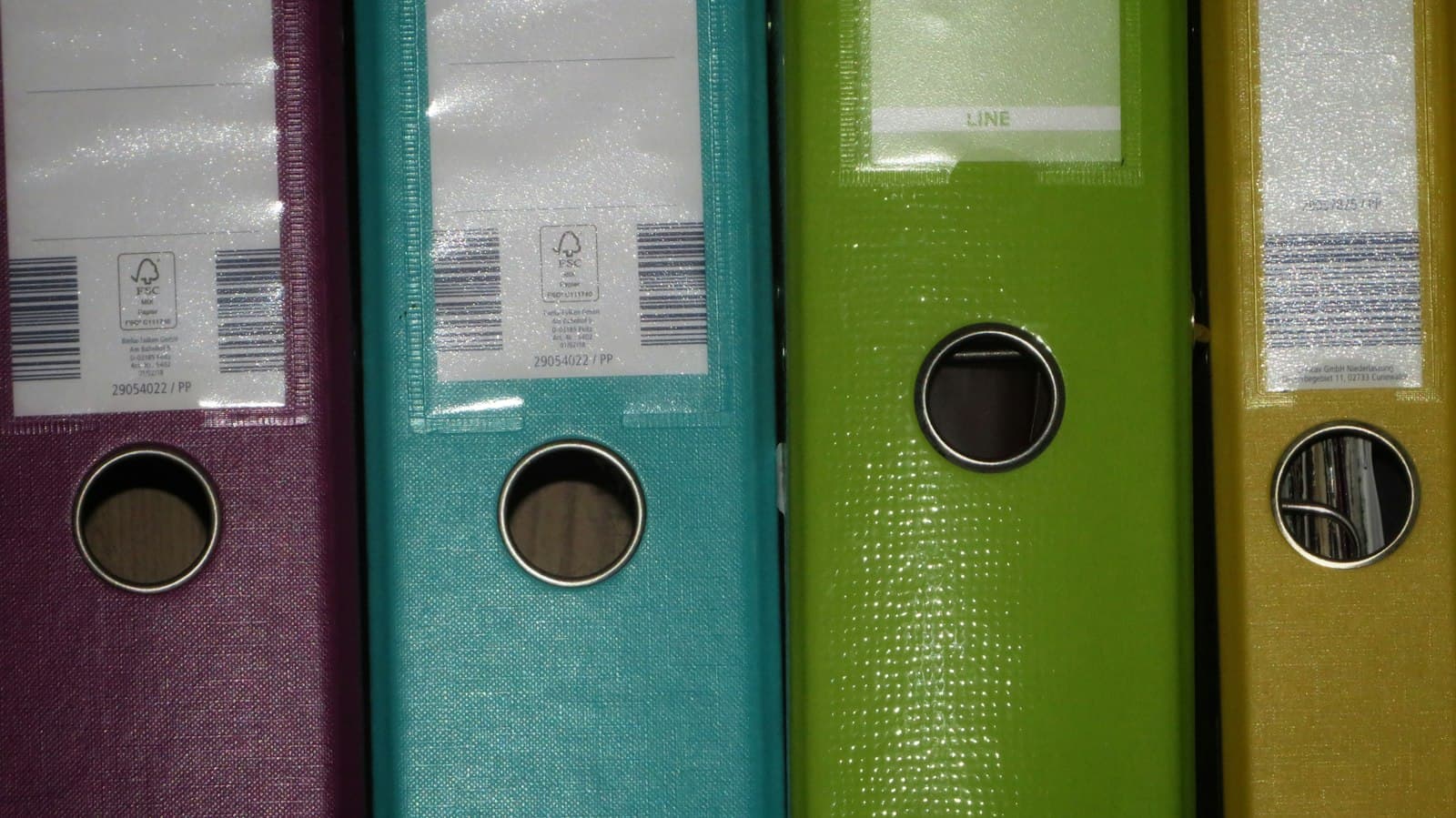
Photo: (Augustin-Foto) Jonas Augustin / Unsplash
In a digital office system, most of the investment usually goes into document routing and digital signing. Case files, meaning grouping all documents of one matter into a complete file and transferring it to the archive, are often left until year end or handled by creating folders on a file server.
Since 1 July 2025 that approach is hard to defend in Vietnam. The 2024 Archives Law and its implementing regulations set concrete deadlines for digital files, metadata requirements and a system milestone in July 2027. This article summarizes the rules in force, the lifecycle of an electronic case file, and the software features needed to comply.
What a case file is and who must keep one
A case file is the set of documents relating to one issue, event or subject, created while the work is carried out. A tender package, a recruitment round, or a draft policy from first draft to issue is each a case file.
Decree 30/2020/ND-CP on clerical work applies to state agencies and organizations and to state-owned enterprises (Article 2). Under Article 31(3), every individual must keep files on the work assigned to them, is responsible for their content, and must hand them over on retirement or transfer. The obligation sits with each officer, not only with the records clerk.
The 2024 Archives Law places records of state-owned enterprises in the State Archival Fonds, while records of private economic organizations are private archives (Article 9). Private companies are not required to follow these filing and transfer rules, but can use them as a good-practice standard alongside the retention rules of sector laws such as accounting and tax.
The rules in force
- Decree 30/2020/ND-CP. Chapter IV covers the file list (Article 28), creating files (Article 29), transfer to the agency archive (Article 30) and responsibilities (Article 31). Appendix VI sets the functions of an electronic records management system. As of September 2026 it has not been replaced.
- Archives Law No. 33/2024/QH15. In force from 1 July 2025, replacing the 2011 law. Covers retention periods (Article 15), transfer deadlines (Article 17), born-digital records and the legal value of digitized copies (Articles 33 and 34).
- Decree 113/2025/ND-CP. Implements the Archives Law from 21 July 2025, replacing Decree 01/2013. Covers the digital archival records management system, digital repositories and the rollout timeline.
- Circular 05/2025/TT-BNV. Professional rules for digital archival records, in force from 1 July 2025. Defines metadata structures for fonds, files and documents and the transfer deadline for digital files; repeals Circular 02/2019/TT-BNV.
- Circular 10/2022/TT-BNV. Retention periods for common records, still widely cited. Home-affairs records follow Circular 08/2025/TT-BNV, and many ministries have issued their own retention circulars.
- Decree 31/2026/ND-CP. Administrative penalties in archiving, in force from 8 March 2026, with maximum fines of VND 30 million for individuals and VND 60 million for organizations.
A note on sources: Circular 01/2019/TT-BNV on electronic records system functions was repealed on 15 June 2020. Many vendor materials still cite it; the correct reference today is Appendix VI of Decree 30/2020.
Lifecycle of an electronic case file
File list. At the start of the year the head of the agency approves and issues the list of files expected that year, with the responsible person and retention period for each (Article 28, Decree 30).
Open, collect, close. When work starts, the officer opens a file from the list, adds documents as they arise, and closes the file when the work is done. For electronic files, missing information and description are completed using system functions (Article 29).
Transfer. The Archives Law allows transfer to the current archive up to one year from the year the work ended. For digital files, Circular 05/2025 requires transfer within 60 days of the work ending (Article 19). If the officer still needs the file, it must still be transferred, after which they receive regular access for 360 days. Sixty days is far shorter than the habit of transferring everything at year end.
Retention. Files are kept permanently or for a set period of at least 2 and at most 70 years from the year the work ended, with the whole file taking the longest period of any document in it (Article 15, Archives Law). Under Circular 10/2022, for example, the outgoing document register is kept permanently and the incoming register for 20 years.
Required software features
Appendix VI of Decree 30/2020 is the reference checklist. The main groups relevant to case files are:
- File list and codes. Yearly file lists, file codes, and a responsible person and retention period per file.
- Linking documents to files. Adding incoming, outgoing and internal documents to files with metadata; one document may belong to several files.
- Transfer reminders. Alerts 30 days before a file is due; for digital files, configure around the 60-day deadline of Circular 05/2025.
- Transfer and integrity. Transfer inside the system; files cannot be altered afterwards; storage by retention period with backup and restore.
- Authentication. Digital signing and signature verification on documents in the file.
- Permissions and logs. Access control per file and an access history; freezing or destroying documents that are withdrawn.
- Export. Export to PDF and XML with metadata structured per Circular 05/2025, so the archive system can ingest files without re-entry.
Case files are tightly bound to document management. The other feature groups are covered in Document management software: must-have features and how to choose.
Three systems that are easy to confuse
Vietnamese regulations use three similar names for three different systems.
- Electronic records management system under Decree 30/2020: the office software where documents are handled and case files are created.
- Digital archival records management system under Decree 113/2025 and Circular 05/2025: the system that receives and manages files after transfer to the archive.
- Digital repository under the 2024 Archives Law: long-term storage infrastructure for digital archival records.
Decree 113/2025 (Article 43) requires bodies holding State Archival Fonds records to build or upgrade the digital archival records management system within 24 months of 21 July 2025, around July 2027. That milestone applies to the second system, but office software is directly affected: files created there must export in the structure the archive system accepts.
Digitizing paper files
Most agencies hold years of paper files. Under Article 34 of the Archives Law, a digitized copy has the same legal value as the original when its content is complete, accessible, marked as digitized and authenticated by a competent party. Digitization therefore goes beyond scanning: the process needs an authentication step and accompanying metadata. How to digitize at scale without sending data outside is covered in digitizing old paperwork with on-premise AI.
Common mistakes
- Folders instead of files. Server folders have no file code, retention period or transfer status, so they do not meet Appendix VI.
- No file list. Without it there is no basis for which work needs a file and who owns it.
- Year-end transfer. For digital files the deadline is 60 days after the work ends.
- Incomplete metadata. Files missing Circular 05/2025 fields must be completed by hand when moved to the archive system.
- Systems built to the old standard. Systems designed for Circular 02/2019/TT-BNV should be reviewed against the Circular 05/2025 data structure.
Conclusion
Case files are where every document flow ends, and where a digital office proves whether it has really replaced paper. With a 60-day deadline for digital files and July 2027 for archive systems, planning case file features from the start costs far less than adding them after go-live.
Tetra eOffice provides document registers, retention policies with automatic archiving when due, classification-based access control and signing inside the workflow. File lists, transfer procedures and export data structures are designed around the rules that apply to each organization during implementation. If your unit is reviewing its systems against the 2024 Archives Law, book a consultation for a detailed comparison.
This article summarizes regulations as of September 2026 and is not a substitute for legal advice on specific cases.
Related articles

Document management software: must-have features and how to choose
How document management software differs from a shared drive and from an official-correspondence system, the five kinds of solutions on the market, a must-have feature list and the questions to ask vendors before signing.
Read ↗
Free warranty and repair management software: does it exist?
Three different kinds of free, a common mix-up between maintenance and repair software, the options with no licence fee, and the costs the word free does not cover.
Read ↗
Six conditions for correspondence software to interconnect with government document systems
Interconnecting with the National Document Interchange Axis or an LGSP is not a flip of an integration switch. A checklist of six technical, legal and security conditions — to audit your system or set tender criteria.
Read ↗See Tetra eOffice handle real documents
A demo on a sample system: registration, routing, deadline tracking and digital signing.