Internal training and employee-assessment software: how to choose
 Đỗ Thanh Mai · HR & payroll specialist··6 min read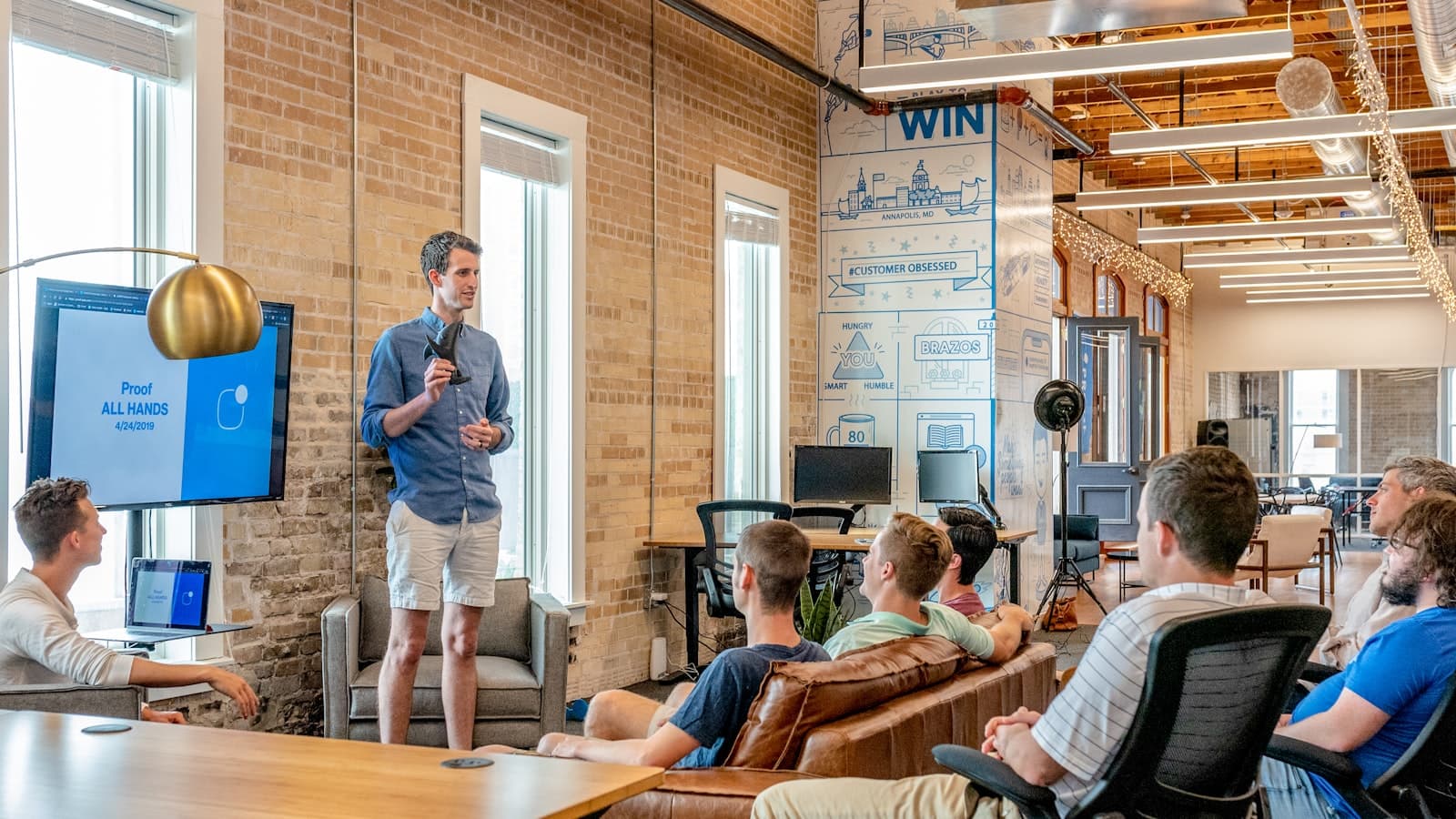
Photo: Austin Distel / Unsplash
Every year, companies pour real money and time into internal training: onboarding new hires, rolling out procedures, running workplace-safety sessions, refreshing compliance. But the moment the session ends, the hardest question begins — who actually absorbed the material, and who just waited for it to be over? Search "internal training software" and you get a wall of "Top 10" and "Top 13" listicles, each vendor calling itself the number-one choice. The catch is that the products on those lists are not the same kind of tool, and they solve very different problems.
This article does not rank a "best" product — there is no such thing. Instead it groups the market by what these tools actually are, gives you a checklist to hold against your own needs, and says plainly when an open-source platform like Otter Test makes sense and when it does not.
Three categories that keep getting lumped together
Most of the confusion comes from cramming three very different categories into one comparison table.
Full-suite LMS platforms
These are complete learning-management platforms such as Lạc Việt, Base.vn, or 1Office. They shine when you want to build a whole e-learning program: upload video lessons, design multi-stage learning paths, track each person's progress, and publish courses by department. If your organization treats training as a continuously running system with many courses and rich media, a full LMS is the right fit.
In return, this category is usually a cloud service billed per user per month, with training data living on the vendor's infrastructure. For a company of a few thousand people, the annual subscription adds up to a number worth weighing, and for an organization with sensitive internal material, data leaving your own systems is something to ask hard questions about.
Assessment and quiz tools
The second category focuses on question banks, running tests, and auto-grading. Many tools here are designed for education — teachers setting exams, tutoring centers, high-stakes filtering tests. They do exams well, but the product language and mindset point at classrooms rather than an HR department. Brought into a company to measure post-training retention, they often feel like too much of one thing and too little of another.
Free forms: Google Forms and Microsoft Forms
This is the default choice for many HR teams for an obvious reason: free, and stood up in five minutes. For a quick survey or a one-off quiz, it's enough. But to be straight about it, a form is the lowest rung of assessment. There's no reusable question bank to draw and shuffle from, role-based access is awkward, there's no defense against copying because everyone gets the same paper in the same order, there's no version control on the questions, and no concept of a certificate or a controlled retake. Good for gathering opinions, weak for serious periodic assessment.
Open-source, self-hosted platforms
The last category is software you install and run on your own infrastructure. Data stays in-house, there are no per-seat license fees, and you have full freedom to modify it. In exchange, you need a little technical capacity to deploy and operate it, or a partner to do it for you. Otter Test belongs to this category, and it's built specifically for measuring retention inside a company rather than for school-style examinations.
Seven criteria for choosing well
Before comparing features, answer these seven questions. They narrow the list faster than any "Top N" table.
- What's the real need. Do you need to manage a full training program with video and learning paths, or just measure how much people retained afterward? If it's the latter, a full LMS is both expensive and heavy for the job.
- Where the data lives. Does any of your training material touch sensitive business, customer, or security information? If so, where the data and questions are stored becomes a hard requirement — especially now that Vietnam's Personal Data Protection Law is in force.
- Cost over time. Multiply the per-user price by your headcount and by twelve months, then compare it against a one-time self-hosting cost. The result is usually far from the first impression.
- How long authoring takes. Writing a question bank by hand is the most time-consuming part. Does the tool draft questions from your documents automatically, and do you get to review them before they go live?
- The philosophy of the test. Is your test meant to filter people out, or to help them learn better? Those two goals lead to opposite designs: one locks you out after a failure, the other lets you retake freely with guidance on what to review.
- Seriousness and anti-cheating. If results carry weight (say, certifying that compliance training was completed), you need a shuffled paper per person, time limits, and role-based access to make the assessment trustworthy.
- Integration. Do you want assessment results to flow back into your existing HR system (HRMS) or training platform (LMS), so employee records update on their own?
Who Otter Test is for
Otter Test doesn't try to do everything. It aims at one thing: measuring how much employees retained after training, and doing it in a lean, private, low-effort way.
It fits mid-sized companies that need to check knowledge after onboarding, after a compliance course, or when a procedure changes — and it fits especially well when you want data to stay in-house. You upload training material as PDF, Markdown, or plain text; the AI reads it and drafts questions for you to review and edit, and the final question bank is still yours to decide. When you open a session, each person gets a shuffled paper to limit copying, and questions are targeted by role so everyone sees only their part.
The philosophical difference is that the test isn't there to weed anyone out. If someone fails, they retake it freely, and after each miss the system points them at exactly the topics they were weak on. Passing earns a certificate — a small but real incentive to finish. On AI, you pick your own provider and model: run a model hosted right inside your systems when you want documents to stay in, or point to a cloud model when you need to read long files. The AI is also only a drafting aid — while employees are taking a test, the system makes no AI calls, so it stays fast and private.
On cost, the core of Otter Test is open source under the MIT license: you self-host it and use it free, with no license fees and no per-seat charges. When you need more, there's an enterprise plan to integrate Otter Test into your existing LMS or HRMS — single sign-on, staff sync, and assessment results pushed back to the right employee records.
Conversely, if your need is to manage a whole library of video courses, multi-stage learning paths, and SCORM-standard content distribution, a full LMS is the right tool — and you can absolutely use an LMS for the training and let Otter Test handle the retention check.
The bottom line
The "Top N" lists aren't wrong, but they answer the wrong question. The question isn't "which software is best," it's "which software fits my needs, budget, and data requirements." If you need to run a large-scale e-learning program, look at the full-LMS category. If you only need a one-off survey, a free form is enough. But if what you need is to measure post-training retention seriously, keep data in-house, and avoid paying per seat, an open-source self-hosted platform like Otter Test is worth a serious look.
To try a quick deployment or discuss an LMS/HRMS integration plan for your company, reach Tetra at contact@tetra.vn for advice and setup.
Related articles

Electronic labor contracts under Decree 337: the national platform goes live
From 1 July 2026 the national e-labor-contract platform goes live; Decree 337/2025 gives e-contracts the legal value of paper. Signing, ID rules and what HR must do.
Read ↗
Vietnam’s 2026 social insurance cap changes mid-year: the reference level rises on 1 July
From 1 July 2026 the base salary rises to VND 2,530,000, lifting the reference level with it. The social health and social insurance contribution cap jumps from VND 46.8 to 50.6 million mid-year — any system that froze its parameters in January will miscalculate from the July payroll run.
Read ↗
Vietnam’s 2026 five-bracket PIT table and the region-based UI ceiling: two payroll parameters to change on 1 January
From 1 January 2026 Vietnam’s PIT table drops from seven brackets to five, and the unemployment-insurance ceiling splits from the social/health insurance ceiling and follows regional minimum wage. Here is how to configure it correctly.
Read ↗Need to review HR processes against new rules?
Talk to Tetra about digitizing records, training and internal processes in line with legal changes.