Sovereign AI in Vietnam: what businesses actually get to decide
 Phạm Hải Anh · AI engineer··5 min read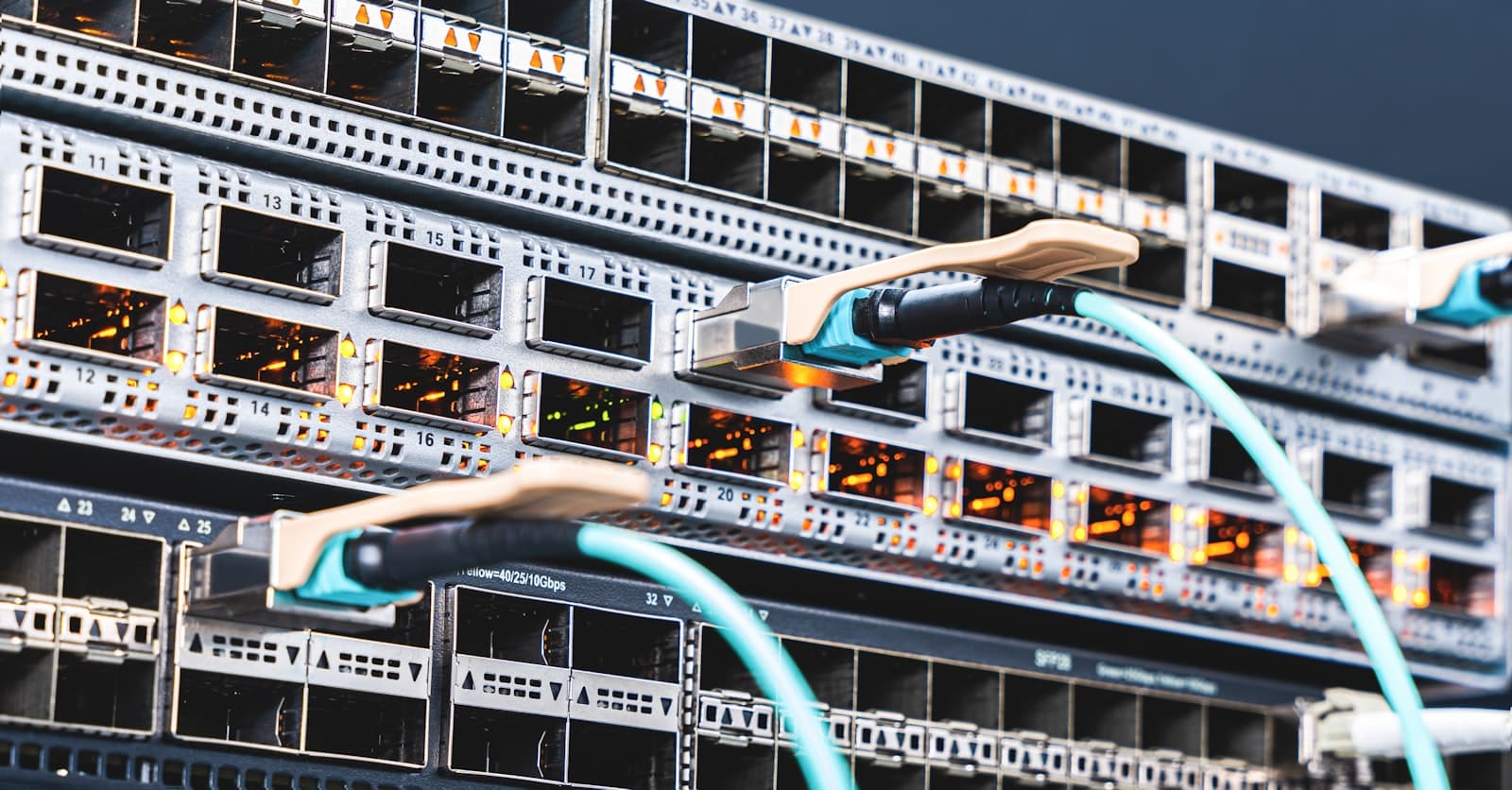
Photo: Lightsaber Collection / Unsplash
"Sovereign AI" has become a national keyword: supercomputers on home soil, Vietnamese language models, national data centers. But for an ordinary business — one that won't build a data center or train a 120-billion-parameter model — what does the phrase actually mean, and what do you genuinely get to decide?
This piece unpacks the concept into three layers, shows which layer businesses actually control, and lays out the realistic options along with the price of each.
What sovereign AI is: three layers
In short, AI sovereignty is the ability to decide your own infrastructure, models and data rather than depending entirely on a foreign provider. It isn't one thing but three stacked layers:
- Infrastructure — GPUs, data centers, where the computation actually runs.
- Models — the language model, who trained it, on what data, how well it handles Vietnamese.
- Data and applications — where your data travels, who can read it, where the application runs.
Distinguishing these matters, because businesses only truly control the third layer — while most news covers the first two.
Where Vietnam stands
The domestic infrastructure and model picture has shifted quickly:
- Infrastructure. FPT announced an AI Factory with NVIDIA infrastructure located in Vietnam, ranking among the world's leading supercomputers on the TOP500 list (FPT Cloud). Viettel is also investing in next-generation AI infrastructure — see sovereign AI infrastructure and the on-prem question.
- Models. Viettel AI announced VT-Super-120B, a large Vietnamese language model aimed at public administration and operational documents (VnExpress) — details in VT-Super 120B and Vietnamese LLMs.
- National standing. Vietnam is named among the focus countries in the "sovereign AI" strategy NVIDIA is driving (TechNode Global).
- Events. GITEX AI VIETNAM 2026 runs 26–27 November 2026 in Hanoi, co-organized by the National Innovation Center (NIC) under the endorsement of the Ministry of Finance and the Ministry of Science and Technology (gitexvietnam.com) — a milestone worth watching to read the ecosystem's direction.
The good news: layers one and two are no longer empty. A Vietnamese business today can run AI without its data leaving the country.
The layer businesses actually decide
Let's be honest about the three layers:
- Infrastructure: most businesses will not build a data center. You rent, or buy a machine sized to your needs.
- Models: you will not train a foundation model either. You use open-source models, or a domestic provider's Vietnamese model.
- Data and applications: this is where you decide. Where your internal documents, HR records and customer data travel — you choose, and nobody chooses for you.
In other words, for most organizations "sovereign AI" in practice means: running AI applications on infrastructure you control, so sensitive data never leaves the organization — not owning a supercomputer.
Why the data layer is a legal matter
Data sovereignty is no longer a philosophical preference; law binds it:
- The Personal Data Protection Law (91/2025), effective 1 January 2026 — governs how organizations collect, process and share personal data. Pushing HR or customer data through a foreign API is a processing act and needs a legal basis.
- The Law on Data (60/2024), effective 1 July 2025 — the overall data-governance framework.
- The Artificial Intelligence Law (134/2025) — a legal corridor for AI, including duties around AI-generated content; see the AI Law 134/2025.
- The Digital Technology Industry Law (71/2025) — the first codification of lifecycle AI risk management; see AI risk governance under Law 71/2025.
For many organizations — especially the public sector and tightly regulated industries — this, not technological enthusiasm, is the real reason they run AI within their control.
Three realistic options, and the price of each
There is no absolutely right choice. There are three directions, each with different trade-offs:
1. Use a foreign cloud API. Fastest, cheapest to start, strongest models. In exchange, data leaves your organization and the country. Acceptable for non-sensitive data (drafting marketing copy, translating public documents). Not appropriate for HR records, contracts or citizen data.
2. Rent domestic AI infrastructure. Data stays in Vietnam, no capital outlay on machines, and it scales. In exchange it's still a third party's infrastructure — you need clear contracts and access control.
3. Run on-premise on your own infrastructure. Maximum control, data goes nowhere, suited to sensitive data. In exchange: hardware investment, operators, and accepting that the models you can run are usually smaller than frontier models.
Choose by data sensitivity and budget, not by slogans. Many organizations go hybrid: sensitive work in-house, public work on external services.
A few things worth saying plainly
On-premise is not free. It swaps subscription cost for hardware and operating cost. At small volumes, renting can be cheaper. Compute total cost of ownership; don't decide on instinct.
On-premise is nobody's exclusive privilege. Major domestic providers also offer AI infrastructure and solutions hosted in Vietnam. What differs between providers is appropriate scale, price and deployment simplicity — not who "can do on-prem".
A small local model is not a copy of a frontier model. But for most office work — document lookup, data extraction, summarization — a moderate model is enough. Don't buy power you won't use.
Where to start
Don't start by buying GPUs. Start with a problem:
- Pick one use case with clear, measurable ROI — internal knowledge lookup, document processing and extraction, drafting assistance. These are where AI creates real value today, not where you need autonomous agents.
- Determine the data sensitivity in that use case — it decides which of the three directions above you're even allowed to choose.
- Start small, measure honestly, then scale. See the approach in deploying on-premise RAG for internal documents and local AI for internal documents.
Conclusion
Sovereign AI at the national level is about supercomputers and large models. At the business level, it is a far simpler question: where does your data travel, and do you control it? Domestic infrastructure and models are now ready enough that the answer no longer has to be "we're forced to send it abroad".
If your organization is weighing how to bring AI into operations while keeping data within your control, book a consultation to pick the right use case and deployment model for your reality.
Related articles
WebMCP: letting AI assistants call tools directly on tetra.vn
WebMCP is a new web standard that lets a site declare its functions for AI assistants to call directly. tetra.vn now supports it, among the first in Vietnam.
Read ↗
Google’s Open Knowledge Format (OKF): packaging knowledge for AI agents — what we learned deploying it
Google just published OKF — an open standard that turns organizational knowledge into a Markdown directory agents read directly. We took the samples apart and pulled out deployment lessons for several domains.
Read ↗
Angler: an open-source search, crawl & research gateway you self-host
Angler is a free, MIT open-source search + crawl + research gateway you self-host: web access for AI agents (Claude Code, Cursor…) over MCP or the Firecrawl SDK, turning the web into clean, bias-resistant markdown for research and AI agents.
Read ↗Try AI on one concrete problem for 30 days
The AI Pilot measures real impact before a large investment, with a stop point after week one.